
How to Stop Re-Posting 'Who's In Friday?' Every Week
If you organize a standing pickleball session, you’ve written some version of this message more times than you’d like to admit: “Who’s in for Friday?” Then you wait. Some people react with a thumbs up. Someone asks what time again. Someone else shows up without saying anything. By the time you’ve got a real headcount, half the week is gone and you’re doing it all again next Friday.
This isn’t a discipline problem. It’s a tooling problem. A group chat is built for conversation, not for answering “is there a game this week, and who’s coming.” Every week starts from zero.
A recurring session is a real, standing thing
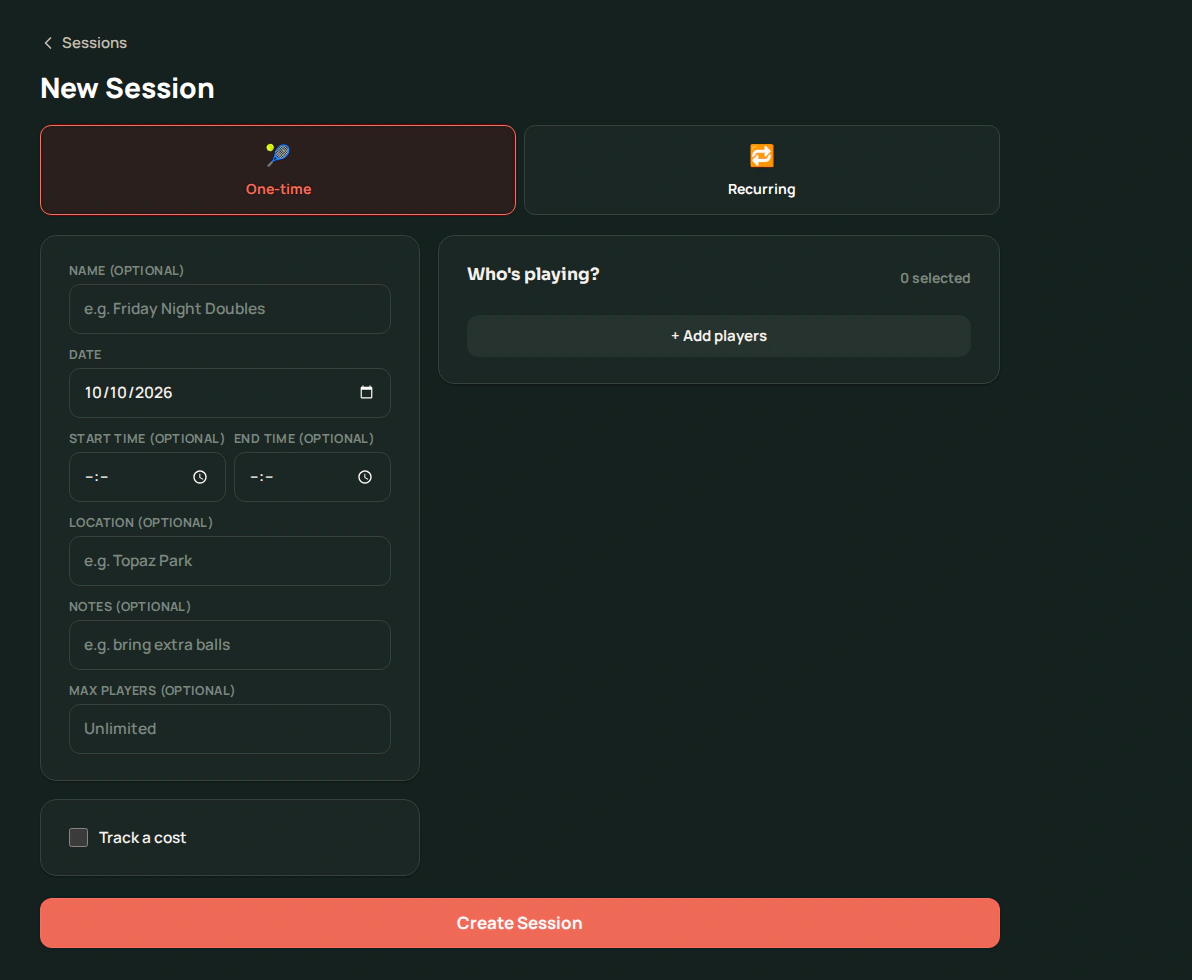
The fix isn’t a better group chat, it’s not using a group chat for this job at all. A recurring session in Volii isn’t a note on a calendar that someone has to remember to turn into a real event. It’s a template: a weekday (or two), a frequency (weekly or every two weeks), a location, and a cost if there is one. From that template, Volii keeps real, joinable sessions generated on a rolling basis, so there’s always an actual session for people to join or leave, weeks before it happens.
Nobody has to post anything. The session already exists. People just show up in the app and say they’re in.
Editing one week without breaking every other week
The other place group-chat scheduling falls apart is exceptions. Court’s double-booked one Friday. Long weekend, so you’re moving it to Thursday. Someone wants to add a start time that didn’t exist before. In a group chat, that means a new message, a new thread of confusion, and no record of what actually happened once it scrolls away.
Volii splits this into two clear choices: “Just this session”, which changes one occurrence without touching anything else, and “This & all future”, which updates the template itself going forward. Past sessions are never touched by either one, which matters more than it sounds like it should. Your stats and ELO depend on session history staying exactly as it happened.
How many people you actually need in the pool
The reason “who’s in Friday?” feels so fragile is usually arithmetic, not enthusiasm. Two courts of doubles needs eight people on the floor. If your group is exactly eight, every single week depends on nobody having a work thing, a sick kid, or a sore shoulder, and the session dies roughly half the time.
The rough shape most groups land on is a pool about half again as large as the number you need playing. Need eight, carry twelve to fourteen. That is large enough that three drop-outs is an inconvenience rather than a cancellation, and small enough that people still know each other’s names and games.
Below that, you are not running a session, you are negotiating one every week. Above roughly twice what you need, you get the opposite problem: people show up and sit out, which is its own reason to stop coming. That is the point to add a court or split into two nights rather than let the pool keep growing.
Set a cutoff, and let it be the bad guy
The second thing that makes standing sessions work is a deadline: a time after which the session is either on or off, and nobody has to keep asking. The evening before is usually about right for an indoor booking you have to pay for either way, and a couple of hours before for a free outdoor court.
The point of a cutoff is not the deadline itself. It is that it moves the decision off the organizer. Without one, someone has to keep judging whether five confirmed is enough, and keep chasing the people who have not answered. With one, the rule decides and nobody has to be chased.
Say the cutoff out loud once, then hold it. The first time a session gets called off at the deadline is the week everyone starts replying on time.
What to do about the people who never reply
Every group has two or three of them, and they are usually not being rude. They are waiting to see if it is happening before committing, which is rational when half the sessions get cancelled.
This is mostly self-correcting once the session is a standing thing with a real cutoff, because there is no longer anything to wait and see about. The people who genuinely cannot commit in advance become the ones who fill a spot when somebody drops, which is a useful role rather than a problem, as long as everyone understands that is what it is.
Weather, without a separate check
One more thing a group chat can’t do: know it’s supposed to rain during your pickleball session before anyone’s driven to the courts. Because a session has a real location, Volii can match it against actual forecast data for that date, so a heads-up shows up right on the session itself instead of living in a different app you’d have to remember to open.
The actual fix
None of this is exotic. It’s just: stop asking the same question every week, and let the thing that already knows the answer keep answering it. Set the recurring session up once. Everyone can see it, join it, and leave it on their own, and the only messages left in your group chat are the ones actually worth sending.
Related features
Keep reading
- How to Organize a Recurring Pickleball GroupA practical guide to starting a weekly pickleball group and keeping it running: how many players you need, picking a slot, splitting court costs, keeping games competitive, and what to stop doing in the group chat.
- Who Owes Who: Fixing the Worst Part of Organizing a SessionWhoever books the court also becomes the unpaid accountant. Here's why e-transfer-and-remember doesn't scale, and what actually fixes it.
- Fair Doubles Rotations: More Than Just Taking TurnsRound-robin partner rotation feels fair. It isn't, once skill gaps enter the picture. Here's what to optimize for instead.
Stay in the loop
Occasional updates on new Volii features. No spam.